
Arthur C. Clarke
Autor · 5 livros catalogados
Autor com 5 livros registrados no Thoth, 0 sagas destacadas.
Synopsis
“UM MUNDO CONHECIDO PELO HOMEM HÁ APENAS UMA VIDA, A MORTE ESPREITAVA SOB MIL DISFARCES INOCENTESNo futuro, a Lua, esse astro que atraiu e encantou a humanidade desde os primórdios, se torna um destino turístico. Seus mares nunca antes navegados, compostos por um depósito de poeira que permaneceu intocado e imóvel ao longo de milhões de anos, passam a ser desbravados por uma nave de cruzeiro com tecnologia de ponta: a Selene.Mas o espaço, apesar de nossos avanços científicos, continua sendo um ambiente arriscado, indômito e cheio de armadilhas. O que parecia um simples passeio turístico se torna uma perigosa aventura quando a Selene, com vinte passageiros a bordo, naufraga em poeira no Mar da Sede.Sem comunicação ou meios de voltar à superfície, o pequeno grupo fica preso, e os turistas, junto a dois tripulantes e um experiente astronauta, se tornam um microcosmo da sociedade. Enquanto aguarda o resgate, o capitão da Selene precisa lidar com as ansiedades de seus passageiros e, ao mesmo tempo, tomar difíceis decisões que podem significar a vida ou a morte para cada um dos náufragos.”

Poeira Lunar

Synopsis
“Nos primeiros anos da Guerra Fria, uma raça tecnologicamente superior ao homem desce dos céus para governar a Terra. Ao contrário do que se poderia imaginar, os invasores se mostram benevolentes e acabam conduzindo o planeta a um período de prosperidade jamais visto, em que não mais existem violência, fome e doenças. Com poucos focos de resistência, a humanidade se rende ao invasor. Mas os Senhores Supremos têm suas regras: não é permitido a ninguém os conhecer, e a exploração do espaço está terminantemente proibida aos homens. Entre revelações surpreendentes e um vago mal-estar que assombra os corações humanos, o real propósito dos novos líderes permanecerá oculto por duzentos anos. Até que a humanidade esteja pronta. Até que uma missão seja cumprida. Até que a raça humana conheça o destino que lhe foi traçado.”

O Fim Da Infância
Synopsis
“In the 22nd century visionary scientist Vannevar Morgan conceives the most grandiose engineering project of all time, and one which will revolutionize the future of humankind in space: a Space Elevator, 36,000 kilometers high, anchored to an equatorial island in the Indian Ocean.”
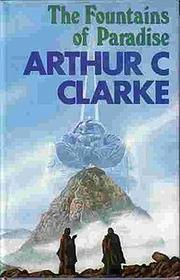
The fountains of paradise
Synopsis
“A novel that proposes an idea about how the human race might have begun and where it might be headed...given a little help from out there. A colaboration of ideas with director Stanley Kubrick in the late 1960's it begins at "the dawn of man" and then leaps to the year 2001 where a mission to Saturn (Jupiter in the film) is mounted to try and answer questions raised by the discovery of an ancient artifact dug up on the moon. Though not particularly fast paced, the science is good, and there are a few hair raising events. There are also interesting speculations about the future, such as the space shuttle, and a device eerily similar to an iPad. Leaving plenty of room for contemplation and the appreciation for the inevitable trials of space travel, this is one of the truly landmark pieces of hard science fiction.”
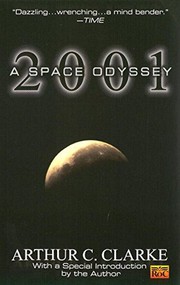
2001
Synopsis
“This book originally appeared in 1962, and was based on essays written during the period 1959 - 1961. Since it was concerned with ultimate possibilities, and not with achievements to be expected in the near future, even the remarkable events of the last decade have dated it very little. But Arthur Clarke has gone over the book making corrections and comments where necessary in order to bring it right up-to-date. The author, amongst many fascinating excursions into what the future may hold, discusses the fourth dimension and the obsolescence of the law of gravity, the exploration of the entire solar system and the colonisation of some of it; seas will mined for energy and minerals, and asteroids will be pulled to Earth to supply needed materials; men, already bigger than they need be, may be bred smaller to be more efficient on less food.”
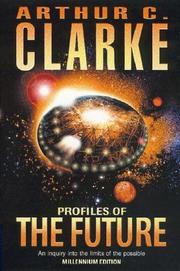
Profiles of the future