Synopsis

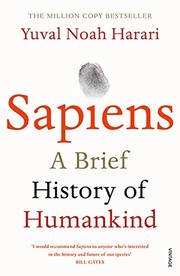
From a renowned historian comes a groundbreaking narrative of humanity’s creation and evolution—a #1 international bestseller—that explores the ways in which biology and history have defined us and enhanced our understanding of what it means to be “human.” One hundred thousand years ago, at least six different species of humans inhabited Earth. Yet today there is only one—homo sapiens. What happened to the others? And what may happen to us? Most books about the history of humanity pursue either a historical or a biological approach, but Dr. Yuval Noah Harari breaks the mold with this highly original book that begins about 70,000 years ago with the appearance of modern cognition. From examining the role evolving humans have played in the global ecosystem to charting the rise of empires, Sapiens integrates history and science to reconsider accepted narratives, connect past developments with contemporary concerns, and examine specific events within the context of larger ideas. Dr. Harari also compels us to look ahead, because over the last few decades humans have begun to bend laws of natural selection that have governed life for the past four billion years. We are acquiring the ability to design not only the world around us, but also ourselves. Where is this leading us, and what do we want to become? Featuring 27 photographs, 6 maps, and 25 illustrations/diagrams, this provocative and insightful work is sure to spark debate and is essential reading for aficionados of Jared Diamond, James Gleick, Matt Ridley, Robert Wright, and Sharon Moalem.

PAG. 342
Capitulo 112
Capitulo 236
Capitulo 360
Capitulo 484
Capitulo 5108
Capa de Sapiens
T
Sapiens

Sapiens

Subtitulo opcional do livro

Yuval Noah Harari - 2011 - Catalogo
Selo neutro
--Sem votos

From a renowned historian comes a groundbreaking narrative of humanity’s creation and evolution—a #1 international bestseller—that explores the ways in which biology and history have defined us and enhanced our understanding of what it means to be “human.” One hundred thousand years ago, at least six different species of humans inhabited Earth. Yet today there is only one—homo sapiens. What happened to the others? And what may happen to us? Most books about the history of humanity pursue either a historical or a biological approach, but Dr. Yuval Noah Harari breaks the mold with this highly original book that begins about 70,000 years ago with the appearance of modern cognition. From examining the role evolving humans have played in the global ecosystem to charting the rise of empires, Sapiens integrates history and science to reconsider accepted narratives, connect past developments with contemporary concerns, and examine specific events within the context of larger ideas. Dr. Harari also compels us to look ahead, because over the last few decades humans have begun to bend laws of natural selection that have governed life for the past four billion years. We are acquiring the ability to design not only the world around us, but also ourselves. Where is this leading us, and what do we want to become? Featuring 27 photographs, 6 maps, and 25 illustrations/diagrams, this provocative and insightful work is sure to spark debate and is essential reading for aficionados of Jared Diamond, James Gleick, Matt Ridley, Robert Wright, and Sharon Moalem.

Ver na Open Library

Detalhes

Generos: Fantasia, Jovem Adulto
Paginas: 384
Publicacao: 2010
Idioma original: Ingles
ISBN: 978-0-123456-78-9
Providers: Open Library, Internet Archive

Avaliações da comunidade

Reviews publicas sao anonimas e opt-in. O foco e o livro.

Carregando avaliacoes...

Sua avaliacao

Entre na sua conta para avaliar este livro.

Fazer login
Sobre o autor

Yuval Noah Harari

Autor com 2 livros no Thoth.

Ver mais

Outros livros do autor

Synopsis

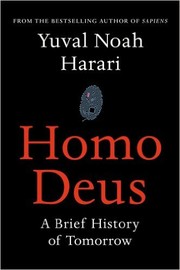
Tras el éxito de Sapiens, Yuval Noah Harari vuelve su mirada al futuro para ver hacia dónde nos dirigimos. Bestseller del New York Times con 1 millón de ejemplares vendidos Yuval Noah Harari, autor de Sapiens, un fenómeno internacional unánimemente aclamado por la crítica, regresa con una secuela igualmente original, convincente y provocadora, centrando su atención en el futuro de la humanidad y en nuestra obsesión por convertirnos en dioses. A lo largo del último siglo, la humanidad ha logrado lo imposible frenando la hambruna, la peste y la guerra. Por primera vez en la historia, más personas mueren por obesidad que por pasar hambre y hay más probabilidades de quitarse la vida que de morir en un conflicto bélico o un atentado terrorista. ¿Qué pasará con la democracia cuando Google y Facebook lleguen a conocer nuestros gustos y preferencias políticas mejor que nos conocemos a nosotros mismos? ¿Qué pasará con el estado de bienestar cuando la inteligencia artificial expulse a los individuos del mercado laboral, creando una «clase innecesaria» de humanos? ¿Cómo podremos lidiar con los avances en ingeniería genética? ¿Terminará Silicon Valley por establecer nuevas religiones en lugar de enfocarse a producir únicamente dispositivos inteligentes? Homo Deus explora los proyectos, los sueños y las pesadillas que configurarán el siglo XXI: desde superar la muerte hasta la creación de la inteligencia y la vida artificial. ¿Hacia dónde nos dirigimos? ¿Cómo protegeremos al mundo de nuestros propios poderes destructivos? He aquí una mirada hacia el futuro de la evolución. He aquí Homo Deus. Reseñas:«Yuval Noah Harari, autor del fenómeno Sapiens, reflexiona sobre el futuro de la humanidad en Homo Deus, un libro de prosa inteligente, fresca y libre de prejuicios.»Jorge Wagensberg, Babelia «Aún más legible, incluso más importante que su excelente Sapiens.»Kazuo Ishiguro, Premio Nobel de Literatura «Homo Deus te impactará y te cautivará, pero sobre todo te hará pensar como nunca antes.»Daniel Kahneman, Premio Nobel de Economía «Harari se convierte en una especie de filósofo del futuro que desarrolla las intuiciones de su primera obra [...] un ritmo y una energía que convierten Homo Deus en un libro francamente ameno.»El Cultural «El épico y mundialmente celebrado Sapiens recibe la secuela que necesitaba: una intensa y compulsiva investigación sobre el apocalipsis de la humanidad en un futuro impulsado por la tecnología.»The Guardian «Un libro implacable y fascinante que seguramente se convertirá, y merece ser un éxito de ventas.»Kirkus Review «Un estimulante libro que lleva al lector a profundizar sobre cuestiones de identidad, conciencia e inteligencia.»The Observer «Un brebaje embriagador de ciencia, filosofía y futurismo.»Mail on Sunday «Un estudio brillante, original, estimulante e importante sobre hacia dónde se dirige la humanidad.»Evening Standard

PAG. 342
Capitulo 112
Capitulo 236
Capitulo 360
Capitulo 484
Capitulo 5108
Capa de ההיסטוריה של המחר
T
ההיסטוריה של

ההיסטוריה של המחר

Selo neutro
--Sem votos

Livros das mesmas categorias

Categorias em comum: Ensaios, História, Não-ficção

Ver categorias
Synopsis

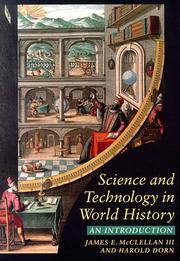
In modern industrial society, the tie between science and technology seems clear, even inevitable. But historically, as James E. McClellan III and Harold Dorn remind us, the connection has been far less apparent. For much of human history, technology depended more on the innovation of skilled artisans than it did on the speculation of scientists. Technology as "applied science," the authors argue, emerged relatively recently, as industry and governments began funding scientific research that would lead directly to new or improved technologies. In Science and Technology in World History, McClellan and Dorn offer an introduction to this changing relationship. McClellan and Dorn review the historical record beginning with the thinking and tool making of prehistoric humans. Neolithic people, for example, developed metallurgy of a sort, using naturally occurring raw copper, and kept systematic records of the moon's phases. Neolithic craftsmen possessed practical knowledge of the behavior of clay, fire, and other elements of their environment, but though they may have had explanations for the phenomena of their crafts, they toiled without any systematic science of materials or the self-conscious application of theory to practice. McClellan and Dorn identify two great scientific traditions: the useful sciences, patronized by the state from the dawn of civilization, and scientific theorizing, initiated by the ancient Greeks. Theirs is a survey of the historical twists and turns of these traditions, leading to the science of our own day. Without neglecting important figures of Western science such as Newton and Einstein, the authors demonstrate the great achievements of non-Western cultures. They remind us that scientific traditions took root in China, India, and Central and South America, as well as in a series of Near Eastern empires, during late antiquity and the Middle Ages, including the vast region that formed the Islamic conquest. From this comparative perspective, the authors explore the emergence of Europe as a scientific and technological power. Continuing their narrative through the Manhattan Project, NASA, and modern medical research, the authors weave the converging histories of science and technology into an integrated, perceptive, and highly readable narrative.

PAG. 342
Capitulo 112
Capitulo 236
Capitulo 360
Capitulo 484
Capitulo 5108
Capa de Science and technology in world history
T
Science and

Science and technology in world history

Selo neutro
--Sem votos