
Classicos
Obras fundamentais que atravessam epocas e seguem relevantes.
Synopsis
“**Dom Casmurro**, publicado pela primeira vez em 1899, é um dos romances realistas mais importantes de Machado de Assis, considerado por alguns sua obra-prima. O livro narra a história de Bento Gonçalves desde sua juventude, abordando temas como religião, adultério e ambiguidade moral.”
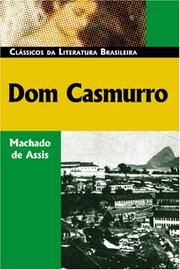
Dom Casmurro

Synopsis
“Dragons. Creatures of legend. Stories told to children. But now dragons have returned to Krynn. The darkness of war and destruction engulfs the land. Hope dawns with the coming of spring. Armed at last with the dragonlances, the heroes lead the people in the final desperate battle against the dragons. Knight and barbarian, warrior and half-elf, dwarf and kender and dark-souled mage; they must overcome their own doubts and resolve their own conflicts before they can hope to defeat - Takhisis, the Queen of Darkness.”

Dragons of Spring Dawning
Synopsis
“"The most influential, provocative, and enduring writings of the American master are gathered in this anthology. Twenty-one carefully chosen selections from Wright's extensive literary output span the important period between 1900 and the late 1930s, when the architect exerted a powerful influence on the developing modern movement. A concise biography, explanatory head notes, and a short annotated bibliography make this an ideal introduction for students."--Jacket.”

Frank Lloyd Wright
Synopsis
“Mon cher ami, en tete de ces pages, j'ai voulu, pour deux raisons tres fortes et tres precises, inscrire votre nom. D'abord, pour que vous sachiez combien votre nom m'est cher. Ensuite, -je le dis avec un tranquille orgueil, -parce que vous aimerez ce livre. Et ce livre, malgre tous ses defauts, vous l'aimerez, parce que c'est un livre sans hypocrisie, parce que c'est de la vie, et de la vie comme nous la comprenons, vous et moi.”
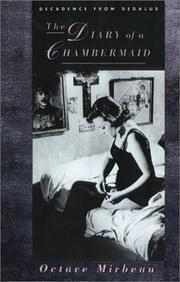
Le journal d'une femme de chambre
Synopsis
“A superb autobiography by one of the great literary figures of the twentieth century, Simone de Beauvoir's Memoirs of a Dutiful Daughter offers an intimate picture of growing up in a bourgeois French family, rebelling as an adolescent against the conventional expectations of her class, and striking out on her own with an intellectual and existential ambition exceedingly rare in a young woman in the 1920s. She vividly evokes her friendships, love interests, mentors, and the early days of the most important relationship of her life, with fellow student Jean-Paul Sartre, against the backdrop of a turbulent political time.”
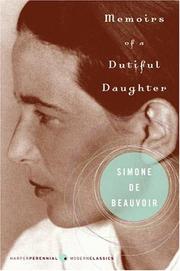
Mémoires d'une jeune fille rangée
Synopsis
“The Food of the Gods and How It Came to Earth is a science fiction novel by H. G. Wells that was first published in 1904. Wells called it "a fantasia on the change of scale in human affairs. . . . I had hit upon [the idea] while working out the possibilities of the near future in a book of speculations called Anticipations (1901)". The novel, which has had various B-movie adaptations, is about a group of scientists that invents food that accelerates the growth of children and turns them into giants when they become adults.”

The food of the gods and how it came to earth
Synopsis
“In the following pages I have confined myself in the main to those problems of philosophy in regard to which I thought it possible to say something positive and constructive, since merely negative criticism seemed out of place. For this reason, theory of knowledge occupies a larger space than metaphysics in the present volume, and some topics much discussed by philosophers are treated very briefly, if at all.”
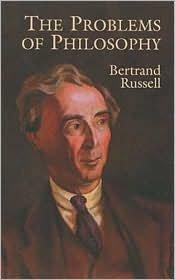
The Problems of Philosophy
Synopsis
“I am the enfant terrible of literature and science. If I cannot, and I know I cannot, get the literary and scientific big-wigs to give me a shilling, I can, and I know I can, heave bricks into the middle of them.' With The Way of All Flesh, Samuel Butler threw a subversive brick at the smug face of Victorian domesticity. Published in 1903, a year after Butler's death, the novel is a thinly disguised account of his own childhood and youth 'in the bosom of a Christian family'. With irony, wit and sometimes rancour, he savaged contemporary values and beliefs, turning inside-out the conventional novel of a family's life through several generations.”

The way of all flesh
Synopsis
“Kim is Rudyard Kipling's story of an orphan born in colonial India and torn between love for his native India and the demands of Imperial loyalty to his Irish-English heritage and to the British Secret Service. Long recognized as Kipling's finest work, Kim was a key factor in his winning the Nobel Prize for Literature in 1907.”
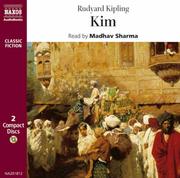
Kim
Synopsis
“The book revolves on the struggles of young Crisostomo Ibarra: how he humbly fights for his childhood sweetheart Maria Clara, for himself and for his fellowmen against the Spanish priest Padre Damaso and the Spanish Government who were then conquerors of San Diego, his native hometown. Coming home to San Diego from Spain to mourn for his father's death, he learned how his father, a rich illustrado, suffered prior to his death. However, he was surprised by the facts how his father had been treated during a trial and after he died. After learning about this, he decided to continue his father's plan of building a school while reuniting with Maria Clara, his childhood sweetheart from a wealthy family while the former parish priest Padre Damaso keeps on rejecting both. Thus, the story of how the Filipinos got afflicted with the "Cancer of the Society" during the Spanish era is told by none other than the National Hero of the Philippines. Many characters who symbolize every type of Filipino during those times have revolved around these characters. Get a glimpse of how the Filipinos fight for their own right, in their own ways during the 17th century.”
Noli Me Tangere
Synopsis
“Thronging with princes, diplomats, beautiful heiresses and international conspirators, the sumptuous suites and corridors of the Grand Babylon are buzzing with gossip, intrigue — even murder. The action opens (and swings from one cliff-hanger to the next) when Theodore Racksole, a New York railroad millionaire with more money than sense, decides to buy up the Grand Babylon, 'for an amusement'”
The Grand Babylon Hotel
Synopsis
“From the book:My dear Walkley: You once asked me why I did not write a Don Juan play. The levity with which you assumed this frightful responsibility has probably by this time enabled you to forget it; but the day of reckoning has arrived: here is your play! I say your play, because qui facit per alium facit per se. Its profits, like its labor, belong to me: its morals, its manners, its philosophy, its influence on the young, are for you to justify. You were of mature age when you made the suggestion; and you knew your man. It is hardly fifteen years since, as twin pioneers of the New Journalism of that time, we two, cradled in the same new sheets, made an epoch in the criticism of the theatre and the opera house by making it a pretext for a propaganda of our own views of life. So you cannot plead ignorance of the character of the force you set in motion. Yon meant me to epater le bourgeois; and if he protests, I hereby refer him to you as the accountable party. I warn you that if you attempt to repudiate your responsibility, I shall suspect you of finding the play too decorous for your taste. The fifteen years have made me older and graver. In you I can detect no such becoming change. Your levities and audacities are like the loves and comforts prayed for by Desdemona: they increase, even as your days do grow. No mere pioneering journal dares meddle with them now: the stately Times itself is alone sufficiently above suspicion to act as your chaperone; and even the Times must sometimes thank its stars that new plays are not produced every day, since after each such event its gravity is compromised, its platitude turned to epigram, its portentousness to wit, its propriety to elegance, and even its decorum into naughtiness by criticisms which the traditions of the paper do not allow you to sign at the end, but which you take care to sign with the most extravagant flourishes between the lines. I am not sure that this is not a portent of Revolution. In eighteenth century France the end was at hand when men bought the Encyclopedia and found Diderot there. When I buy the Times and find you there, my prophetic ear catches a rattle of twentieth century tumbrils.”
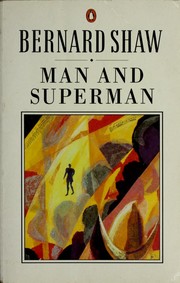
Man and Superman