Synopsis

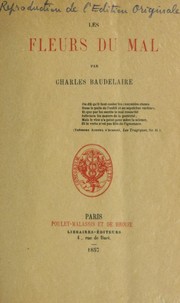
*Les Fleurs du mal* est un recueil de poèmes de Charles Baudelaire, reprenant la quasi-totalité de sa production en vers de 1840 jusqu'à sa mort, survenue fin août 1867. Publié le 21 juin 1857, le recueil scandalise aussitôt la société française. Son auteur subit un procès retentissant. Le jugement le condamne à une forte amende, réduite sur intervention de l'Impératrice ; il entraîne la censure de six pièces jugées immorales. De 1861 à 1868, l'ouvrage est réédité dans trois versions successives, enrichies de nouveaux poèmes ; les pièces interdites paraissent en Belgique. La réhabilitation n'interviendra que près d'un siècle plus tard, en mai 1949. Le recueil est considéré comme une œuvre majeure de la poésie moderne. Il diffère d'un recueil classique où souvent, le seul hasard réunit des poèmes généralement disparates. Ici, les poèmes s'articulent avec méthode et selon un dessein précis.

PAG. 342
Capitulo 112
Capitulo 236
Capitulo 360
Capitulo 484
Capitulo 5108
Capa de Les fleurs du mal
T
Les fleurs d

Les fleurs du mal

Subtitulo opcional do livro

Charles Baudelaire - 1855 - Catalogo
Selo neutro
--Sem votos

*Les Fleurs du mal* est un recueil de poèmes de Charles Baudelaire, reprenant la quasi-totalité de sa production en vers de 1840 jusqu'à sa mort, survenue fin août 1867. Publié le 21 juin 1857, le recueil scandalise aussitôt la société française. Son auteur subit un procès retentissant. Le jugement le condamne à une forte amende, réduite sur intervention de l'Impératrice ; il entraîne la censure de six pièces jugées immorales. De 1861 à 1868, l'ouvrage est réédité dans trois versions successives, enrichies de nouveaux poèmes ; les pièces interdites paraissent en Belgique. La réhabilitation n'interviendra que près d'un siècle plus tard, en mai 1949. Le recueil est considéré comme une œuvre majeure de la poésie moderne. Il diffère d'un recueil classique où souvent, le seul hasard réunit des poèmes généralement disparates. Ici, les poèmes s'articulent avec méthode et selon un dessein précis.

Ver na Open Library

Detalhes

Generos: Fantasia, Jovem Adulto
Paginas: 384
Publicacao: 2010
Idioma original: Ingles
ISBN: 978-0-123456-78-9
Providers: Open Library, Internet Archive

Avaliações da comunidade

Reviews publicas sao anonimas e opt-in. O foco e o livro.

Carregando avaliacoes...

Sua avaliacao

Entre na sua conta para avaliar este livro.

Fazer login

Sobre o autor

Charles Baudelaire

Autor com 1 livros no Thoth.

Ver mais

Outros livros da saga

Ainda nao encontramos outros livros relacionados nesta saga.

Livros das mesmas categorias

Categorias em comum: Clássicos, Ensaios, Poesia
Ver categorias
Synopsis

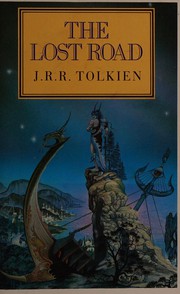
At the end of the 1937 J.R.R. Tolkien reluctantly set aside his now greatly elaborated work on the myths and heroic legends of Valinor and Middle-earth and began The Lord of the Rings. This fifth volume of The History of Middle-earth, edited by Christopher Tolkien, completes the presentation of the whole compass of his writing on those themes up to that time. Later forms of the Annuals of Valinor and the Annals of Berleriand had been composed, The Silmarillion was nearing completion in a greatly amplified version, and a new map had been made; the myth of the Music of the Ainur had become a separate work; and the legend of the Downfall of Numenor had already entered in a primitive form, introducing the cardinal ideas of the World Made Round and the Straight Path into the vanished West. Closely associated with this was the abandoned time-travel story, The Lost Road, which was to link the world of Numenor and Middle-earth with the legends of many other times and peoples. A long essay, The Lhammas, had been written on the ever more complex relations of the languages and dialects of Middle-earth; and an etymological dictionary had been undertaken, in which a great number of words and names in the Elvish languages were registered and their formation explained - thus providing by far the most extensive account of their vocabularies that has appeared.

PAG. 342
Capitulo 112
Capitulo 236
Capitulo 360
Capitulo 484
Capitulo 5108
Capa de The lost road and other writings
T
The lost roa

The lost road and other writings

Selo neutro
--Sem votos
Synopsis

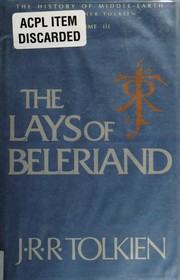
This is the third volume of the History of Middle-earth, which comprises here-tofore unpublished manuscripts that were written over a period of many years before Tolkien's Simlarillion was published. Volumes 1 and 2 were the Book of Lost Tales, Part One and The Book of Lost Tales, Part Two. Together, these volumes encompass an extraordinarily extensive body of material ornamenting and buttressing what must be the most fully realized world ever to spring from a single author's imagination. "I write alliterative verse with pleasure," wrote J.R.R. Tolkien in 1955, "though I have published little beyond the fragments in The Lord of the Rings, except The Homecoming of Beorhtnoth." The first of the poems in The Lays of Beleriand is the previously unpublished Lay of the Children of Hurin, his early but most sustained work in the ancient English meter, intended to narrate on a grand scale the tragedy of Turin Turambar. It was account of the killing by Turin of his friend Beleg, as well as a unique description of the great redoubt of Nargothrond. The Lay of the Children of Hurin was supplanted by the Lay of Leithian, "Release from Bondage", in which another major legend of the Elder Days received poetic form, in this case in rhyme. The chief source of the short prose tale of Beren and Luthien is The Silmarillion. This, too, was not completed, but the whole Quest of the Silmaril is told, and the poem breaks off only after the encounter with Morgoth in his subterranean fortress. Many years later, when The Lord of the rings was finished, J.R.R. Tolkien returned to the Lay of Leithian and started on a new version, which is also given in this book. Accompanying the poems are commentaries on the evolution of the history of the Elder Days, which was much developed during the years of the composition of the two Lays. Also included is the notable criticism in detail of the Lay of Lethian by C.S. Lewis, Tolkien's friend and colleague, who read the poem in 1929. By assuming that this poem is actually a fragment from a past lost in history, Lewis underlined the remarkable power of its author's imaginative talents and academic competence.

PAG. 342
Capitulo 112
Capitulo 236
Capitulo 360
Capitulo 484
Capitulo 5108
Capa de The Lays of Beleriand
T
The Lays of

The Lays of Beleriand

Selo neutro
--Sem votos