Synopsis

Many English-speaking readers of the Roman de la rose, the famous dream allegory of the thirteenth century, have come to rely on Charles Dahlberg's elegant and precise translation of the Old French text. His line-by-line rendering in contemporary English is available again, this time in a third edition with an updated critical apparatus. Readers at all levels can continue to deepen their understanding of this rich tale about the Lover and his quest - against the admonishments of Reason and the obstacles set by Jealousy and Resistance - to pluck the fair Rose in the Enchanted Garden. The original introduction by Dahlberg remains an excellent overview of the work, covering such topics as the iconographic significance of the imagery and the use of irony in developing the central theme of love. His new preface reviews selected scholarship through 1990 and beyond, which examines, for example, the sources and influences, the two authors, the nature of the allegorical narrative as a genre, the use of first person, and the poem's early reception. The new bibliographic material incorporates that of the earlier editions. The sixty-four miniature illustrations from thirteenth- and fifteenth-century manuscripts are retained, as are the notes keyed to the Langlois edition, on which the translation is based.

PAG. 342
Capitulo 112
Capitulo 236
Capitulo 360
Capitulo 484
Capitulo 5108
Capa de Roman de la Rose
T
Roman de la

Roman de la Rose

Subtitulo opcional do livro

Guillaume de Lorris - 1493 - Catalogo
Selo neutro
--Sem votos

Many English-speaking readers of the Roman de la rose, the famous dream allegory of the thirteenth century, have come to rely on Charles Dahlberg's elegant and precise translation of the Old French text. His line-by-line rendering in contemporary English is available again, this time in a third edition with an updated critical apparatus. Readers at all levels can continue to deepen their understanding of this rich tale about the Lover and his quest - against the admonishments of Reason and the obstacles set by Jealousy and Resistance - to pluck the fair Rose in the Enchanted Garden. The original introduction by Dahlberg remains an excellent overview of the work, covering such topics as the iconographic significance of the imagery and the use of irony in developing the central theme of love. His new preface reviews selected scholarship through 1990 and beyond, which examines, for example, the sources and influences, the two authors, the nature of the allegorical narrative as a genre, the use of first person, and the poem's early reception. The new bibliographic material incorporates that of the earlier editions. The sixty-four miniature illustrations from thirteenth- and fifteenth-century manuscripts are retained, as are the notes keyed to the Langlois edition, on which the translation is based.

Ver na Open Library

Detalhes

Generos: Fantasia, Jovem Adulto
Paginas: 384
Publicacao: 2010
Idioma original: Ingles
ISBN: 978-0-123456-78-9
Providers: Open Library, Internet Archive

Avaliações da comunidade

Reviews publicas sao anonimas e opt-in. O foco e o livro.

Carregando avaliacoes...

Sua avaliacao

Entre na sua conta para avaliar este livro.

Fazer login

Sobre o autor

Guillaume de Lorris

Autor com 1 livros no Thoth.

Ver mais

Outros livros da saga

Ainda nao encontramos outros livros relacionados nesta saga.

Livros das mesmas categorias

Categorias em comum: Clássicos, Filosofia, Poesia
Ver categorias
Synopsis

De goddelijke komedie is de beschrijving van een denkbeeldige tocht door het hiernamaals. Zij heeft drie delen: de hel, het vagevuur en het paradijs en ieder van deze delen heeft drieëndertig zangen van niet geheel gelijke lengte, terwijl aan het eerste deel nog een inleidende zang voorafgaat, waardoor het totale aantal van de zang honderd bedraagt. Dit aantal is geen toevalligheid. Het getal honderd gold in de middeleeuwse getallensymboliek, waarvan ook Dante een naarstig beoefenaar was, als het zinnebeeld van de volmaaktheid. Drie is het getal van de personen der heilige drie-eenheid, drieëndertig is het aantal jaren van Jezus' aardse leven. In de eerste zang van De goddelijke komedie is Dante verdwaald in een donker woud en terwijl hij wanhopig naar hulp uitziet ontmoet hij daar de Latijnse dichter Vergilius. Samen verlaten zij het aardoppervlak en dalen af naar de hel, die voorgesteld wordt als een systeem van concentrische, zich steeds verder vernauwende kringen, een soort geringde trechter, die tenslotte in het middelpunt van de aarde eindigt. Daar zit Lucifer in het ijs, met zijn hoofd naar ons halfrond toe en met zijn voeten naar het zuidelijk halfrond gekeerd. Tussen het ijs en Lucifer vinden Dante en Vergilius een weg langs het middelpunt van de aarde en stijgen dan weer op naar het zuidelijk halfrond. Zij bereiken een eiland, waar zich een hoge berg verheft, de louteringsberg van het vagevuur, waar de zielen die in staat van genade zijn gestorven, maar hun aardse schulden nog niet hebben uitgeboet, geleidelijk gelouterd worden en opstijgen naar de hemelse zaligheid. Deze berg, een soort tegenbeeld van de hel, heeft langs zijn flanken steeds nauwer wordende gaanderijen. Daarlangs stijgen Dante en Vergilius opwaarts naar de top, waar zich het aardse paradijs bevindt. Wanneer zij daar zijn aangekomen, wordt Vergilius als Dante's geleider afgelost door Beatrice. Samen met Beatrice stijgt Dante nu opwaarts naar het paradijs. De eeuwige woonplaats van de zaligen bestraald door het licht van God.

PAG. 342
Capitulo 112
Capitulo 236
Capitulo 360
Capitulo 484
Capitulo 5108
Capa de La Divina Commedia
T
La Divina Co

La Divina Commedia

Selo neutro
--Sem votos
Synopsis

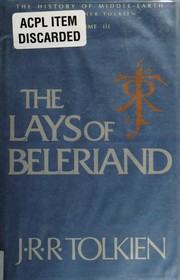
This is the third volume of the History of Middle-earth, which comprises here-tofore unpublished manuscripts that were written over a period of many years before Tolkien's Simlarillion was published. Volumes 1 and 2 were the Book of Lost Tales, Part One and The Book of Lost Tales, Part Two. Together, these volumes encompass an extraordinarily extensive body of material ornamenting and buttressing what must be the most fully realized world ever to spring from a single author's imagination. "I write alliterative verse with pleasure," wrote J.R.R. Tolkien in 1955, "though I have published little beyond the fragments in The Lord of the Rings, except The Homecoming of Beorhtnoth." The first of the poems in The Lays of Beleriand is the previously unpublished Lay of the Children of Hurin, his early but most sustained work in the ancient English meter, intended to narrate on a grand scale the tragedy of Turin Turambar. It was account of the killing by Turin of his friend Beleg, as well as a unique description of the great redoubt of Nargothrond. The Lay of the Children of Hurin was supplanted by the Lay of Leithian, "Release from Bondage", in which another major legend of the Elder Days received poetic form, in this case in rhyme. The chief source of the short prose tale of Beren and Luthien is The Silmarillion. This, too, was not completed, but the whole Quest of the Silmaril is told, and the poem breaks off only after the encounter with Morgoth in his subterranean fortress. Many years later, when The Lord of the rings was finished, J.R.R. Tolkien returned to the Lay of Leithian and started on a new version, which is also given in this book. Accompanying the poems are commentaries on the evolution of the history of the Elder Days, which was much developed during the years of the composition of the two Lays. Also included is the notable criticism in detail of the Lay of Lethian by C.S. Lewis, Tolkien's friend and colleague, who read the poem in 1929. By assuming that this poem is actually a fragment from a past lost in history, Lewis underlined the remarkable power of its author's imaginative talents and academic competence.

PAG. 342
Capitulo 112
Capitulo 236
Capitulo 360
Capitulo 484
Capitulo 5108
Capa de The Lays of Beleriand
T
The Lays of

The Lays of Beleriand

Selo neutro
--Sem votos