Synopsis

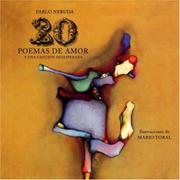
*Veinte poemas de amor y una canción desesperada* es una de las obras más célebres del poeta chileno Pablo Neruda. Publicado en junio de 1924, el poemario lanzó a su autor a la fama con apenas 19 años de edad, y es una de las obras literarias de mayor renombre del siglo XX en el idioma español. Audazmente metafórica y sensual, esta colección yuxtapone la pasión juvenil con la desolación del dolor. Extraídos de las conexiones más íntimas y personales del poeta, los poemas combinan el erotismo y el mundo natural con la influencia del expresionismo y el genio del poeta. El propio Neruda señaló que *Veinte poemas de amor y una canción desesperada* es el resultado consciente de sustituir la ambición poética y la gran elocuencia que trataba de abarcar los misterios del hombre y el universo por un nuevo modo. El vocabulario es en general sencillo, aunque pertenece al dominio de la lengua literaria convencional desde el romanticismo y el modernismo. ---------- *Twenty Love Poems and a Song of Despair* is one of Chilean poet Pablo Neruda's most celebrated works. Published in June 1924, the collection launched its author to fame at just 19 years of age and is one of the most renowned literary works of the 20th century in the Spanish language. Boldly metaphorical and sensual, this collection juxtaposes youthful passion with the desolation of grief. Drawn from the poet's most intimate and personal connections, the poems combine eroticism and the natural world with the influence of Expressionism and the poet's genius. Neruda himself noted that *Twenty Love Poems and a Song of Despair* is the conscious result of replacing poetic ambition and grand eloquence that sought to encompass the mysteries of man and the universe with a new mode. The vocabulary is generally simple, although it belongs to the domain of conventional literary language since Romanticism and Modernism.

PAG. 342
Capitulo 112
Capitulo 236
Capitulo 360
Capitulo 484
Capitulo 5108
Capa de Veinte poemas de amor y una canción desesperada
T
Veinte poema

Veinte poemas de amor y una canción desesperada

Subtitulo opcional do livro

Pablo Neruda - 1924 - Catalogo
Selo neutro
--Sem votos

*Veinte poemas de amor y una canción desesperada* es una de las obras más célebres del poeta chileno Pablo Neruda. Publicado en junio de 1924, el poemario lanzó a su autor a la fama con apenas 19 años de edad, y es una de las obras literarias de mayor renombre del siglo XX en el idioma español. Audazmente metafórica y sensual, esta colección yuxtapone la pasión juvenil con la desolación del dolor. Extraídos de las conexiones más íntimas y personales del poeta, los poemas combinan el erotismo y el mundo natural con la influencia del expresionismo y el genio del poeta. El propio Neruda señaló que *Veinte poemas de amor y una canción desesperada* es el resultado consciente de sustituir la ambición poética y la gran elocuencia que trataba de abarcar los misterios del hombre y el universo por un nuevo modo. El vocabulario es en general sencillo, aunque pertenece al dominio de la lengua literaria convencional desde el romanticismo y el modernismo. ---------- *Twenty Love Poems and a Song of Despair* is one of Chilean poet Pablo Neruda's most celebrated works. Published in June 1924, the collection launched its author to fame at just 19 years of age and is one of the most renowned literary works of the 20th century in the Spanish language. Boldly metaphorical and sensual, this collection juxtaposes youthful passion with the desolation of grief. Drawn from the poet's most intimate and personal connections, the poems combine eroticism and the natural world with the influence of Expressionism and the poet's genius. Neruda himself noted that *Twenty Love Poems and a Song of Despair* is the conscious result of replacing poetic ambition and grand eloquence that sought to encompass the mysteries of man and the universe with a new mode. The vocabulary is generally simple, although it belongs to the domain of conventional literary language since Romanticism and Modernism.

Ver na Open Library

Detalhes

Generos: Fantasia, Jovem Adulto
Paginas: 384
Publicacao: 2010
Idioma original: Ingles
ISBN: 978-0-123456-78-9
Providers: Open Library, Internet Archive

Avaliações da comunidade

Reviews publicas sao anonimas e opt-in. O foco e o livro.

Carregando avaliacoes...

Sua avaliacao

Entre na sua conta para avaliar este livro.

Fazer login

Sobre o autor

Pablo Neruda

Autor com 1 livros no Thoth.

Ver mais

Outros livros da saga

Ainda nao encontramos outros livros relacionados nesta saga.

Livros das mesmas categorias

Categorias em comum: Clássicos, Poesia, Romance
Ver categorias
Synopsis

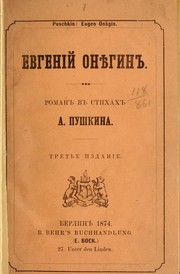
Eugene Onegin (Russian: Евге́ний Оне́гин, BGN/PCGN: Yevgeniy Onegin) is a novel in verse written by Alexander Pushkin. It is a classic of Russian literature, and its eponymous protagonist has served as the model for a number of Russian literary heroes (so-called superfluous men). It was published in serial form between 1825 and 1832. The first complete edition was published in 1833, and the currently accepted version is based on the 1837 publication. Almost the entire work is made up of 389 stanzas of iambic tetrameter with the unusual rhyme scheme "AbAbCCddEffEgg", where the uppercase letters represent feminine rhymes while the lowercase letters represent masculine rhymes. This form has come to be known as the "Onegin stanza" or the "Pushkin sonnet." The rhythm, innovative rhyme scheme, the natural tone and diction, and the economical transparency of presentation all demonstrate the virtuosity which has been instrumental in proclaiming Pushkin as the undisputed master of Russian poetry. The story is told by a narrator (a lightly fictionalized version of Pushkin's public image), whose tone is educated, worldly, and intimate. The narrator digresses at times, usually to expand on aspects of this social and intellectual world. This allows for a development of the characters and emphasises the drama of the plot despite its relative simplicity. The book is admired for the artfulness of its verse narrative as well as for its exploration of life, death, love, ennui, convention and passion. It influenced Vikram Seth's Golden Gate.

PAG. 342
Capitulo 112
Capitulo 236
Capitulo 360
Capitulo 484
Capitulo 5108
Capa de Evgeniĭ Onegin
T
Evgeniĭ One

Evgeniĭ Onegin

Selo neutro
--Sem votos
Synopsis

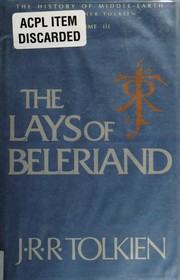
This is the third volume of the History of Middle-earth, which comprises here-tofore unpublished manuscripts that were written over a period of many years before Tolkien's Simlarillion was published. Volumes 1 and 2 were the Book of Lost Tales, Part One and The Book of Lost Tales, Part Two. Together, these volumes encompass an extraordinarily extensive body of material ornamenting and buttressing what must be the most fully realized world ever to spring from a single author's imagination. "I write alliterative verse with pleasure," wrote J.R.R. Tolkien in 1955, "though I have published little beyond the fragments in The Lord of the Rings, except The Homecoming of Beorhtnoth." The first of the poems in The Lays of Beleriand is the previously unpublished Lay of the Children of Hurin, his early but most sustained work in the ancient English meter, intended to narrate on a grand scale the tragedy of Turin Turambar. It was account of the killing by Turin of his friend Beleg, as well as a unique description of the great redoubt of Nargothrond. The Lay of the Children of Hurin was supplanted by the Lay of Leithian, "Release from Bondage", in which another major legend of the Elder Days received poetic form, in this case in rhyme. The chief source of the short prose tale of Beren and Luthien is The Silmarillion. This, too, was not completed, but the whole Quest of the Silmaril is told, and the poem breaks off only after the encounter with Morgoth in his subterranean fortress. Many years later, when The Lord of the rings was finished, J.R.R. Tolkien returned to the Lay of Leithian and started on a new version, which is also given in this book. Accompanying the poems are commentaries on the evolution of the history of the Elder Days, which was much developed during the years of the composition of the two Lays. Also included is the notable criticism in detail of the Lay of Lethian by C.S. Lewis, Tolkien's friend and colleague, who read the poem in 1929. By assuming that this poem is actually a fragment from a past lost in history, Lewis underlined the remarkable power of its author's imaginative talents and academic competence.

PAG. 342
Capitulo 112
Capitulo 236
Capitulo 360
Capitulo 484
Capitulo 5108
Capa de The Lays of Beleriand
T
The Lays of

The Lays of Beleriand

Selo neutro
--Sem votos