Synopsis

El *Poema de mio Cid*, o *Cantar de mio Cid,* es un cantar de gesta anónimo que relata hazañas heroicas inspiradas libremente en los últimos años de la vida del caballero castellano Rodrigo Díaz de Vivar el Campeador. La versión conservada fue compuesta, según la mayoría de la crítica actual, alrededor del año 1200. Se trata de la primera obra poética extensa de la literatura española y el único cantar épico de la misma conservado casi completo; solo se han perdido la primera hoja del original y otras dos en el interior del códice, aunque el contenido de las lagunas existentes puede ser deducido de las prosificaciones cronísticas, en especial de la *Crónica de veinte reyes.* La relevancia del Cantar no se limita a lo literario sino que da inicio a toda una disciplina intelectual: la filología como ciencia moderna en España a finales del siglo XIX, que se inicia con el estudio de este poema por parte de Ramón Menéndez Pidal (1869-1968) y su decisión de aplicar por primera vez a este texto el método histórico-crítico, la más potente herramienta de la filología de su época, inaugurando así los estudios filológicos españoles.

PAG. 342
Capitulo 112
Capitulo 236
Capitulo 360
Capitulo 484
Capitulo 5108
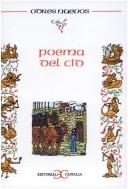
Capa de Poema de mio Cid
T
Poema de mio

Poema de mio Cid

Subtitulo opcional do livro

Anonymous - 1868 - Catalogo
Selo neutro
--Sem votos

El *Poema de mio Cid*, o *Cantar de mio Cid,* es un cantar de gesta anónimo que relata hazañas heroicas inspiradas libremente en los últimos años de la vida del caballero castellano Rodrigo Díaz de Vivar el Campeador. La versión conservada fue compuesta, según la mayoría de la crítica actual, alrededor del año 1200. Se trata de la primera obra poética extensa de la literatura española y el único cantar épico de la misma conservado casi completo; solo se han perdido la primera hoja del original y otras dos en el interior del códice, aunque el contenido de las lagunas existentes puede ser deducido de las prosificaciones cronísticas, en especial de la *Crónica de veinte reyes.* La relevancia del Cantar no se limita a lo literario sino que da inicio a toda una disciplina intelectual: la filología como ciencia moderna en España a finales del siglo XIX, que se inicia con el estudio de este poema por parte de Ramón Menéndez Pidal (1869-1968) y su decisión de aplicar por primera vez a este texto el método histórico-crítico, la más potente herramienta de la filología de su época, inaugurando así los estudios filológicos españoles.

Ver na Open Library

Detalhes

Generos: Fantasia, Jovem Adulto
Paginas: 384
Publicacao: 2010
Idioma original: Ingles
ISBN: 978-0-123456-78-9
Providers: Open Library, Internet Archive

Avaliações da comunidade

Reviews publicas sao anonimas e opt-in. O foco e o livro.

Carregando avaliacoes...

Sua avaliacao

Entre na sua conta para avaliar este livro.

Fazer login

Sobre o autor

Anonymous

Autor com 2 livros no Thoth.

Ver mais

Livros das mesmas categorias

Categorias em comum: Clássicos, História, Poesia
Ver categorias
Synopsis

This is the third volume of the History of Middle-earth, which comprises here-tofore unpublished manuscripts that were written over a period of many years before Tolkien's Simlarillion was published. Volumes 1 and 2 were the Book of Lost Tales, Part One and The Book of Lost Tales, Part Two. Together, these volumes encompass an extraordinarily extensive body of material ornamenting and buttressing what must be the most fully realized world ever to spring from a single author's imagination. "I write alliterative verse with pleasure," wrote J.R.R. Tolkien in 1955, "though I have published little beyond the fragments in The Lord of the Rings, except The Homecoming of Beorhtnoth." The first of the poems in The Lays of Beleriand is the previously unpublished Lay of the Children of Hurin, his early but most sustained work in the ancient English meter, intended to narrate on a grand scale the tragedy of Turin Turambar. It was account of the killing by Turin of his friend Beleg, as well as a unique description of the great redoubt of Nargothrond. The Lay of the Children of Hurin was supplanted by the Lay of Leithian, "Release from Bondage", in which another major legend of the Elder Days received poetic form, in this case in rhyme. The chief source of the short prose tale of Beren and Luthien is The Silmarillion. This, too, was not completed, but the whole Quest of the Silmaril is told, and the poem breaks off only after the encounter with Morgoth in his subterranean fortress. Many years later, when The Lord of the rings was finished, J.R.R. Tolkien returned to the Lay of Leithian and started on a new version, which is also given in this book. Accompanying the poems are commentaries on the evolution of the history of the Elder Days, which was much developed during the years of the composition of the two Lays. Also included is the notable criticism in detail of the Lay of Lethian by C.S. Lewis, Tolkien's friend and colleague, who read the poem in 1929. By assuming that this poem is actually a fragment from a past lost in history, Lewis underlined the remarkable power of its author's imaginative talents and academic competence.

PAG. 342
Capitulo 112
Capitulo 236
Capitulo 360
Capitulo 484
Capitulo 5108
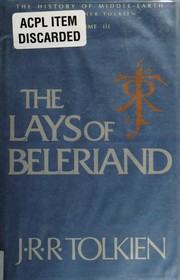
Capa de The Lays of Beleriand
T
The Lays of

The Lays of Beleriand

Selo neutro
--Sem votos