Synopsis

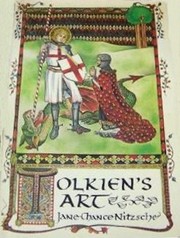
A literary detective work about Tolkien's inspiration and sources. Shows how The Lord of the Rings is the result of an ancient story-telling tradition that dates to the dawn of Western culture; and how, by drawing upon the world's primary myths and legends, Tolkien created his own mythology for the twentieth century.

PAG. 342
Capitulo 112
Capitulo 236
Capitulo 360
Capitulo 484
Capitulo 5108
Capa de Tolkien's ring
T
Tolkien's ri

Tolkien's ring

Subtitulo opcional do livro

David Day - 1994 - Catalogo
Selo neutro
--Sem votos

A literary detective work about Tolkien's inspiration and sources. Shows how The Lord of the Rings is the result of an ancient story-telling tradition that dates to the dawn of Western culture; and how, by drawing upon the world's primary myths and legends, Tolkien created his own mythology for the twentieth century.

Ler no Thoth

Detalhes

Generos: Fantasia, Jovem Adulto
Paginas: 384
Publicacao: 2010
Idioma original: Ingles
ISBN: 978-0-123456-78-9
Providers: Open Library, Internet Archive

Avaliações da comunidade

Reviews publicas são anônimas e opt-in. O foco e o livro.

Carregando avaliações...

Sua avaliação

Entre na sua conta para avaliar este livro.

Fazer login

Sobre o autor

David Day

Autor com 9 livros no Thoth.

Ver mais

Livros das mesmas categorias

Categorias em comum: Ensaios, Fantasia, Não-ficção
Ver categorias
Synopsis

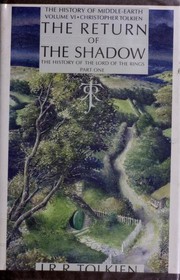
The Return of the Shadow is the first volume of the The History of The Lord of the Rings and the sixth volume of The History of Middle-earth. It is a history of the creation of The Lord of the Rings, a fascinating study of Tolkien's great masterpiece, from its inception to the end of the first volume, The Fellowship of the Ring. In The Return of the Shadow (the abandoned title of the first volume of The Lord of the Rings) Christopher Tolkien describes, with full citation of the earliest notes, outline plans, and narrative drafts, the intricate evolution of The Fellowship of the Ring and the gradual emergence of the conceptions that transformed what J.R.R. Tolkien for long believed would be a far shorter book, 'a sequel to The Hobbit'. The enlargement of Bilbo's 'magic ring' into the supremely potent and dangerous Ruling Ring of the Dark Lord is traced and the precise moment is seen when, in an astonishing and unforeseen leap in the earliest narrative, a Black Rider first rode into the Shire, his significance still unknown. The character of the hobbit called Trotter (afterwards Strider or Aragorn) is developed while his indentity remains an absolute puzzle, and the suspicion only very slowly becomes certainty that he must after all be a Man. The hobbits, Frodo's companions, undergo intricate permutations of name and personality, and other major figures appear in strange modes: a sinister Treebeard, in league with the Enemy, a ferocious and malevolent Farmer Maggot. The story in this book ends at the point where J.R.R. Tolkien halted in the story for a long time, as the Company of the Ring, still lacking Legolas and Gimli, stood before the tomb of Balin in the Mines of Moria. The Return of the Shadow is illustrated with reproductions of the first maps and notable pages from the earliest manuscripts.

PAG. 342
Capitulo 112
Capitulo 236
Capitulo 360
Capitulo 484
Capitulo 5108
Capa de The Return of the Shadow
T
The Return o

The Return of the Shadow

Selo neutro
--Sem votos
Synopsis

Este volumen parte del reconocimiento del género de fantasía, su distinción de otros géneros populares y la identificación entre la división de lo fantástico y lo maravilloso. Asimismo, realiza una delimitación de sus características principales a partir de teoría y obras literarias anglosajonas e hispánicas que abarcan desde la mitad del siglo XX hasta lo que va del siglo XXI sin dejar de mencionar las raíces de la fantasía: la mitología y épica clásicas, los textos medievales, renacentistas y cuentos folklóricos. Además, destaca la inestabilidad de este género popular al referirse a los diferentes subgéneros (en constante evolución) y divisiones existentes que lo conforman y lo vuelven un género versátil. Posteriormente, se destaca cómo la fantasía es leída como modo, género y fórmula y se hace alusión a la propuesta de la autora Farah Mendlesohn para subdividir este género en fantasía de portal, inmersiva, intrusiva y liminar. También este volumen se refiere a diferentes críticos que, a través del tiempo, ahondan en las temáticas y estructuras narrativas de la fantasía. Después, este acercamiento teórico se dedica a reflexionar sobre la recepción de los textos de fantasía, específicamente en las emociones (positivas o negativas) que produce en los lectores. Finalmente, se destaca cómo el género de fantasía es político y puede llegar a ser radical y revolucionario. Esta afirmación se ejemplifica al explorar la influencia de los estudios feministas y de género en la fantasía.

PAG. 342
Capitulo 112
Capitulo 236
Capitulo 360
Capitulo 484
Capitulo 5108
Capa de A lomos de dragones: Introducción al estudio de la fantasía
T
A lomos de d

A lomos de dragones: Introducción al estudio de la fantasía

Selo neutro
--Sem votos